
Seating
A grid for four, a wheel for six, and a fair first-player reveal.
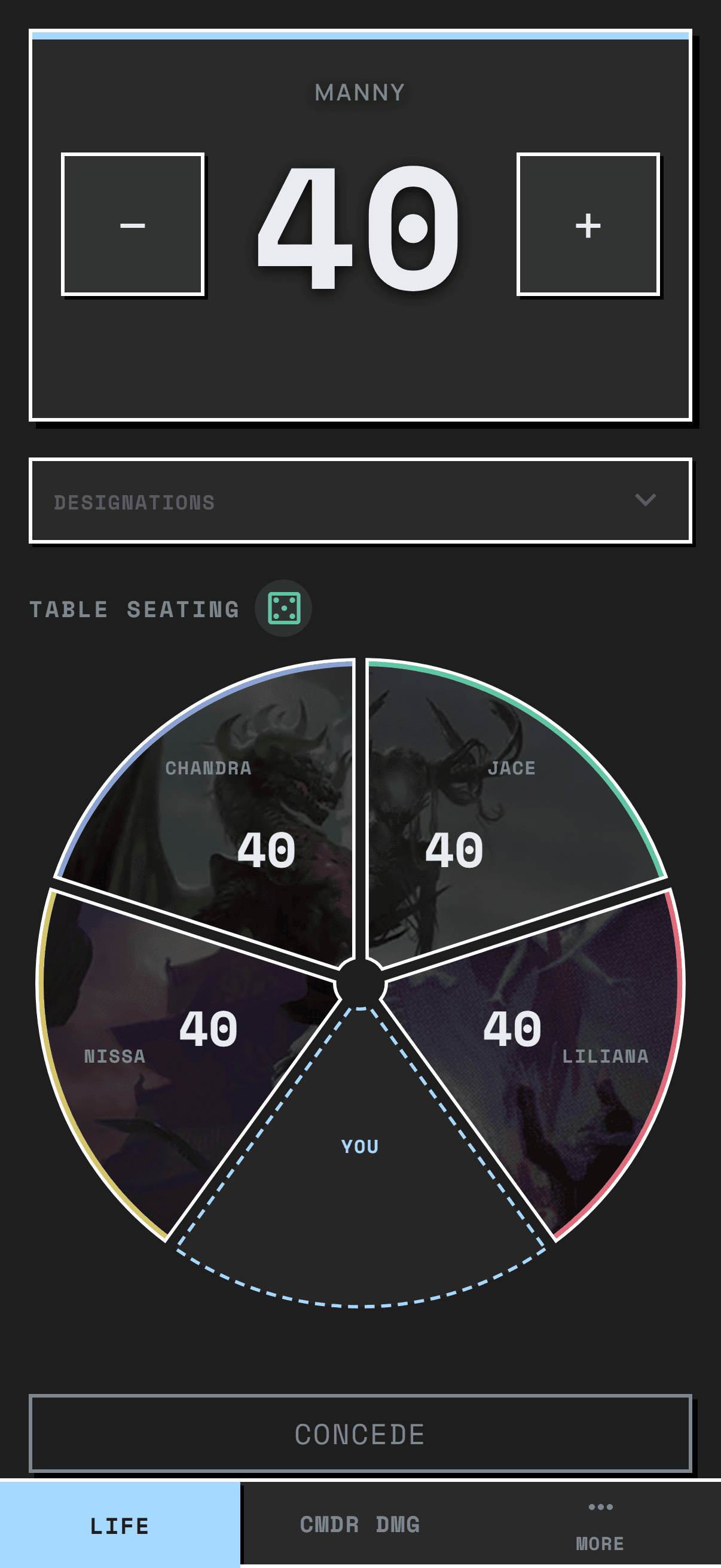
Seating adapts to the size of the table. Small pods get a compact grid. Bigger ones get a radial wheel, because on a phone screen a six-player grid stops telling you who is on your left.
Choose your seat in the lobby
The chart starts empty and nobody is placed for you: tap a chair to claim it, tap another to move. The host sets the table size, four to six, and it grows on its own if more players turn up.
Picking for yourself is the point — you are the only one who knows where you are actually sitting. The lobby chart looks the same to everyone, so you can claim the chair next to the player you are really next to. Once the game starts it swings round to your seat and you are the one at the bottom.
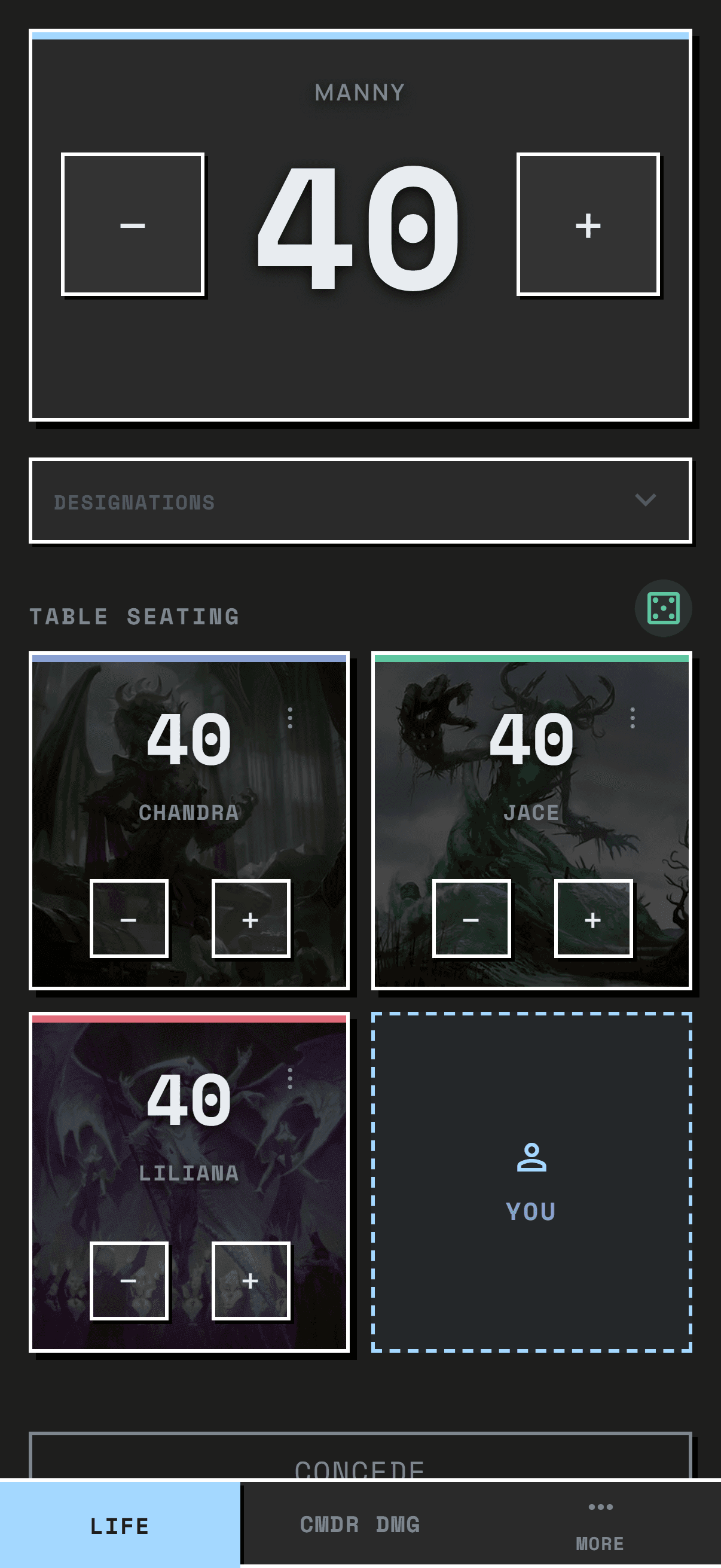
3 to 4 players: a grid
Smaller pods keep the same grid once the game begins, and seats can be dragged to swap if the table rearranges itself.
5 to 6 players: a radial wheel
At five or six players the layout becomes a wheel, every opponent a pie slice around you, matching how the real table looks from where you are sitting. Tap a slice for that opponent's radial control disc: life, commander damage, and counters, right where they sit. Long-press swaps seats, same as the grid.
A fair first-player reveal
Who goes first is picked at random at game start, and the host can re-roll for a fresh draw.
Seating drives combat and win conditions
Where you sit matters more in some game modes than others. Star's wheel dims the opponents you cannot legally attack, and Kingdoms ties hidden roles to specific seats.