
How to play Kingdoms
Hidden roles for five or six players. Only the King is public, and everyone else is guessing.
Updated 2026-08-04
Kingdoms is a hidden-role Commander variant for five or six players. Everyone is dealt a secret role with its own win condition, except the King, whose identity is public from the first turn. The King sits on 50 life with a target on their back, and nobody else knows who is hunting them and who is protecting them.
It borrows its structure from social deduction games, and it answers a real problem with large pods. Six players in a free-for-all means most of the table is waiting rather than playing. In Kingdoms everyone has a private agenda from turn one.
What do you need to play Kingdoms?
Five or six players and something to deal roles with. Five index cards, or five cards from a spare deck with the roles written on sticky notes, will do. Normal Commander decks, no restrictions.
The role pools are fixed and the format does not stretch:
| Role | 5 players | 6 players | Wins when |
|---|---|---|---|
| King | 1 | 1 | They are the last player standing |
| Knight | 1 | 1 | Only the King and the Knight are left, with the King alive. Both win. |
| Bandit | 2 | 2 | The King is eliminated while at least one Bandit is alive |
| Assassin | 1 | 1 | They are the last player standing |
| Usurper | None | 1 | Never as the Usurper. They must kill the King themselves, claim the throne, and win as King. |
Setting up
- Take one role card per player: King, Knight, Bandit, Bandit and Assassin for five players, plus the Usurper for six.
- Shuffle them and deal one face down to each player.
- Everyone looks at their own role and keeps it secret.
- Whoever drew the King turns their card face up.
- Set the King to 50 life and everyone else to 40.
- The King takes the first turn.
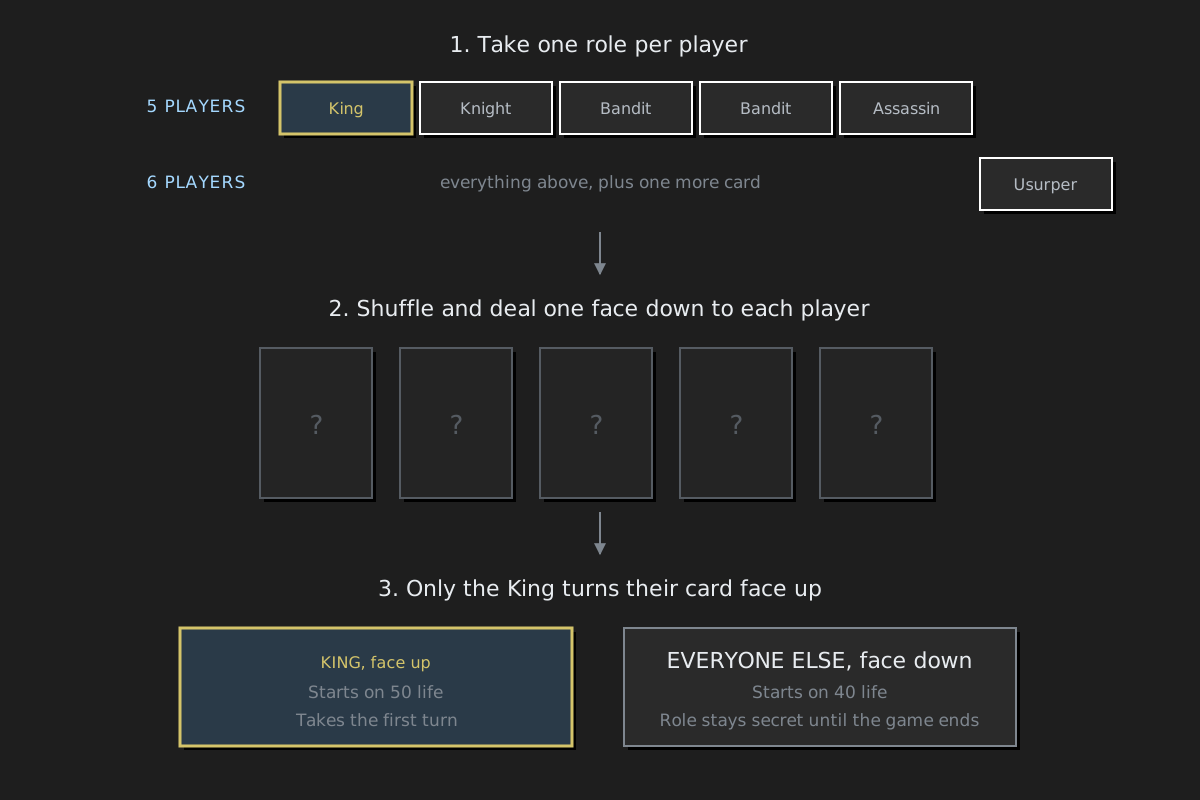
Do not skip step 4. The King being public is what drives the whole game. Everyone knows where the crown is, and nobody knows who wants it.
Who takes the first turn in Kingdoms?
The King, always. Skip whatever method you normally use to pick a starting player.
The King is the only player everyone can identify, which makes them the natural target for five other people. Fifty life and the first turn are the compensation. In practice the King's real defence is the Knight, who wins alongside them and has every reason to intervene, and whoever else at the table has quietly worked out that a dead King ends the game before they can win it.
How do the roles win?
The Bandits win the instant the King is eliminated, provided at least one Bandit is still alive. Both Bandits win together if both are alive.
This is the rule that decides most games, and it catches everyone the first time. Killing the King ends the game immediately, even if four other players are still alive and holding a winning board. A Bandit who spent the whole game doing nothing still wins, because the condition asks only that the King is dead and a Bandit is breathing.
The Knight wins when only they and the King are left, with the King alive. Both of them win. The Knight has no path to victory once the King is dead, so the Knight's game is entirely about keeping the crown on the board.
The Assassin wins by being the last player standing. That is harder than it sounds, because if the King dies while any Bandit lives, the Bandits win and the game is over. The Assassin has to remove both Bandits before the King goes down. Any Assassin who joins the pile-on early is usually handing the game to someone else.
The King wins as the sole survivor. If only the King and the Knight are left, the Knight's condition takes priority and both of them win.
The Usurper, in a six-player game, never wins as the Usurper. Their only route is the throne claim below, and it opens only if they kill the King themselves.
What happens when the King dies in a six-player game?
If the Usurper is alive and they are the one who killed the King, the game pauses and offers them the throne before any win is awarded.
That condition is the whole role. The Usurper has to land the killing blow themselves — reduce the King to 0 life, or otherwise cause their elimination. If a Bandit, the Assassin or anyone else finishes the King first, the throne stays empty and the Bandits win as normal. Sitting back and letting someone else do the work is exactly what the Usurper cannot do.
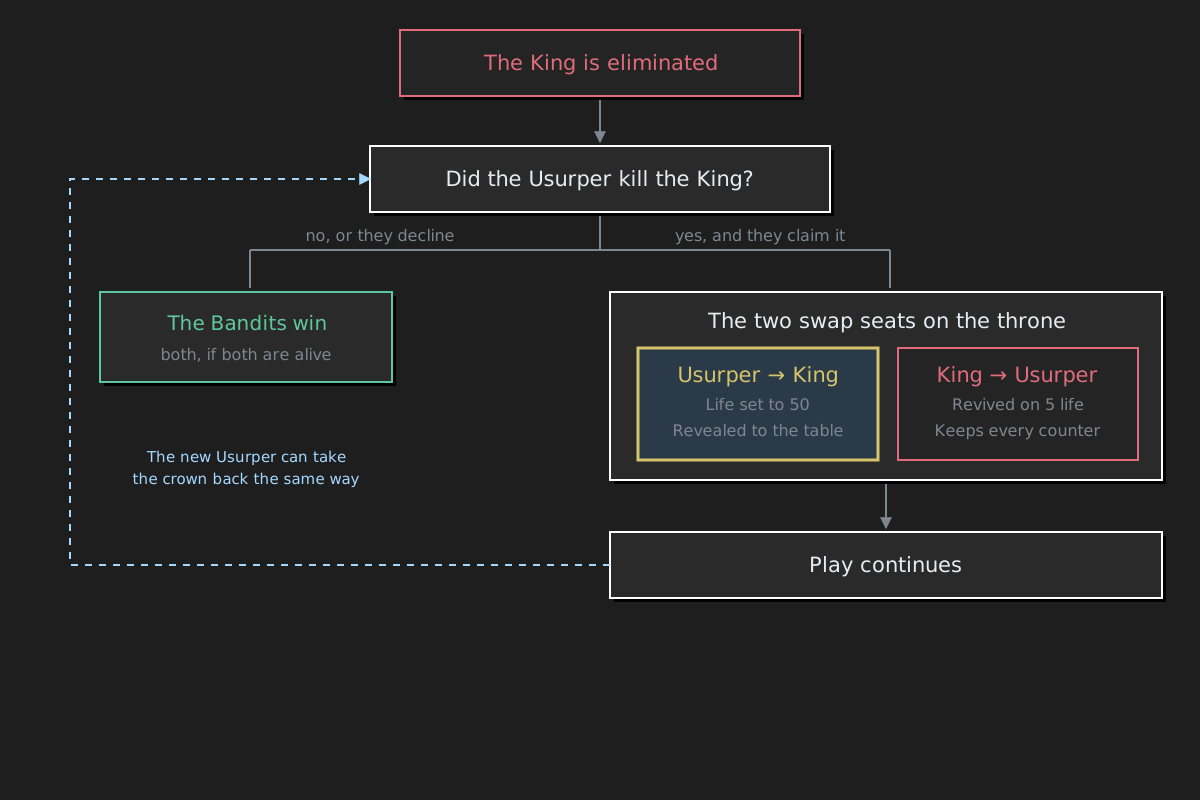
The claim swaps the two players:
- The Usurper becomes the King, is set to 50 life, and is revealed to the table.
- The fallen King comes back as the Usurper on 5 life.
- Play continues from where it stopped.
The revived player keeps their wounds. Counters, tokens and all commander damage already dealt to them carry over. If someone had already landed 15 commander damage on the old King, that player needs six more to finish the job, and the new Usurper is sitting on 5 life while they do it.
The swap is symmetric and it can happen again, under the same condition. The demoted ex-King is now the Usurper, so if they survive on 5 life and kill the new King themselves, they can take the crown back.
If the Usurper declines, the Bandits win as normal. Declining is occasionally correct: a Usurper on a strong board with weak opposition may prefer to stay hidden, but they cannot win from there, so it is usually a concession.
When it goes wrong
The King dies and no Bandit is alive.
Nobody wins yet. The Bandits' condition needs a living Bandit, and the Knight's needs a living King, so both are off the table. Play continues until one player is left, and that player wins if they are the Assassin. This is the situation the Assassin has been working towards all game.
Someone reveals their role early.
There is no rule against it and no penalty. A Bandit announcing themselves to recruit help is a legitimate, and often good, play.
A player is eliminated before anyone knows their role.
Their role stays hidden until the game ends, at which point everything is revealed. Eliminated players cannot win, with the single exception of a King revived by a throne claim.
The King dies to someone else and the Usurper wants the throne anyway.
They do not get it. The claim belongs to whoever landed the killing blow, and the table watched it happen, so this one settles itself.
Someone wants to know if the Usurper exists.
In a five-player game there is no Usurper, and everyone knows it because everyone knows the role pool. In a six-player game there is always exactly one.
Playing Kingdoms on Manatable
Dealing roles face down and keeping them secret is the fiddly part of Kingdoms, and it is the part that goes wrong at a physical table. Manatable deals them, holds them server-side so they never reach anyone else's device, and reveals every role when the game ends.
Press and hold your own seat to peek at your role, the same gesture you would use to lift the corner of a face-down card. The King's seat gets a crown and a gilded border from turn one, life totals are set correctly without anyone counting to 50, and the app takes the first turn away from the random draw and gives it to the King.
When the King falls in a six-player game, the Usurper gets a private prompt to claim or decline. Everyone else sees only that the King has fallen, so declining does not out them. The app cannot always tell who dealt the final points of damage, so it prompts the Usurper whenever the King dies and states the condition on the prompt: take the crown only if you killed the King yourself, otherwise stay hidden.
Create a free table or join one with a room code. See all Commander variants, compare it with Star, which is the other five-player option, or read the shorter pitch on the game modes feature page.
Common questions
- What is Kingdoms EDH?
- Kingdoms is a hidden-role Commander variant for five or six players. Each player is secretly dealt a role. A five-player game uses King, Knight, two Bandits and an Assassin; a six-player game adds the Usurper. Only the King's role is public. Each role has a different win condition, so nobody knows for certain who is on their side.
- How many players do you need for Kingdoms?
- Five or six. Five uses King, Knight, Bandit, Bandit and Assassin. Six adds the Usurper, who can seize the throne if they are the one who kills the King. The role pools are fixed, so the format does not work with four or seven.
- How much life does the King start with in Kingdoms?
- Fifty. Everyone else starts on the normal 40. The King also takes the first turn, and their identity is public from the moment the game begins, so the extra ten life and the tempo are compensation for being the obvious target.
- How do the Bandits win in Kingdoms?
- The Bandits win the moment the King is eliminated, as long as at least one Bandit is still alive. Both Bandits win together if both are alive. This ends the game immediately, even if other players are still in it, which is the single most important rule to understand before you play.
- Can the Usurper win in Kingdoms?
- Not as the Usurper. The Usurper's only path is to kill the King themselves and then claim the throne, which turns them into the new King on 50 life. They then win under the King's condition. If someone else lands the killing blow, or the Usurper declines, the Bandits win instead.
- Is Kingdoms an official Magic format?
- No. Kingdoms is a community format, sometimes called Bang EDH after the hidden-role card game it borrows from. It does not appear in the Magic Comprehensive Rules, which cover Free-for-All, Grand Melee, Team vs. Team, Emperor, Two-Headed Giant and Alternating Teams in sections 806 to 811.
Other variants
How to play Commander with 3 players
Three-player pods collapse into a two-on-one. Standoff fixes that by ending the game on the first kill.
Read the guide5 playersHow to play Star format
Five players in a ring. You can only attack the two sitting opposite you, and the two beside you are allies.
Read the guide